Choosing eco-friendly promotional products isn't as simple as picking something with the word “sustainable” on the label.
For HR and marketing teams, the merchandise still needs to do its job. It should be useful to the people receiving it, represent your brand well and make sense for the campaign you're running. That might mean reusable drinkware for an employee onboarding program, recycled-material notebooks for an event, or a more premium sustainable gift for an important client. The best choice depends on who you're giving it to, what you want the merchandise to achieve and the sustainability considerations that matter to your organisation.
This guide explains what to look for when choosing eco-friendly promotional products, from materials and product lifespan through to branding, packaging, budget and fulfilment.
.jpg?width=1920&height=490&name=Artboard%201%20(22).jpg)
Red Tomato Snapshot
Choosing sustainable merchandise isn't just about what something is made from. We'd also look at whether people will actually use it, how long it is likely to last and whether it makes sense for the campaign.
When comparing eco-friendly promotional products, consider:
- Usefulness - Is it something people will actually use?
- Durability - Is it made to last beyond the campaign?
- Materials - What is the product made from?
- Relevance - Does it suit the recipient and occasion?
- Branding - Can your brand be applied effectively?
- Budget - Does it make sense for the quantity and campaign?
- Fulfilment - Can it be stored, assembled and delivered efficiently?
.jpg?width=1920&height=490&name=Artboard%203%20(22).jpg)
What Makes a Promotional Product Eco-Friendly?
“Eco-friendly” can mean different things depending on the product. A reusable bottle, a recycled notebook and a bag made from renewable materials all have different sustainability considerations. Rather than taking the label at face value, look at what the product is actually made from and how it is likely to be used.
Materials
Start with the material. What's the product made from, and is there useful information available about where that material comes from? Depending on the product, you may come across recycled materials, renewable materials, natural fibres or other alternatives to conventional materials.
The important thing is to understand what you're actually buying rather than relying on a broad environmental claim.
Reusability
Reusable products can be a practical choice because they have a place in someone's everyday routine. Think about drinkware, bags, food containers or other products that recipients are likely to reach for again and again. If someone continues using a branded product long after your event or campaign, your brand continues to travel with it.
Product Lifespan
Material isn't the only thing that matters. Think about how long the product is likely to stay useful. A well-made product that someone uses for years can have far more staying power than something that gets thrown away after a few uses. This is particularly important for promotional merchandise. If the product isn't useful or durable, it may not achieve the visibility or value you were hoping for.
Red Tomato Insight: Start With the Person, Not the Product
.jpg?width=1920&height=490&name=Artboard%204%20(16).jpg)
Sustainable vs Eco-Friendly Promotional Products
You'll often see “sustainable” and “eco-friendly” used interchangeably. They aren't necessarily describing exactly the same thing. Both terms can cover a wide range of products and materials, which is why it's useful to look beyond the terminology.
Rather than getting caught up in whether a product is labelled “sustainable” or “eco-friendly”, look at the details behind it.
Ask:
- What is the product made from?
- Is it reusable?
- Is it designed to last?
- Is there clear information about the material?
- Will the recipient actually use it?
- Does it make sense for the campaign?
The more specific the information, the easier it is to make an informed decision.
.jpg?width=1920&height=490&name=Artboard%205%20(17).jpg)
How to Choose the Right Eco-Friendly Promotional Products
There isn't one sustainable product that works for every campaign. A reusable bottle might be ideal for an employee welcome kit, while a premium recycled-material gift could make more sense for a client event. Start with the recipient and the reason you're giving the merchandise. The product choice becomes much easier from there.
Start With Your Audience
First, think about who's actually going to receive the merchandise. What would they use in their day-to-day life or work? An office-based employee may appreciate desk accessories or drinkware, while event attendees might be more interested in something they can use while travelling or commuting. The more relevant the product is to the recipient, the more likely they are to keep using it.
Define the Campaign Objective
Next, think about what you want the merchandise to achieve.
Are you:
- welcoming new employees?
- promoting your brand at an event?
- thanking clients?
- supporting a marketing campaign?
- recognising employees?
- building awareness?
- giving something useful to customers?
The answer can change the type of product you should choose.
Consider Product Usefulness
Here's a simple test:
Would the person receiving this actually use it? If the answer is no, it probably isn't the right product, even if it ticks every sustainability box. Practical merchandise tends to have a longer life because people have a reason to keep it.
Consider Your Budget
Sustainable merchandise is available across a wide range of price points. Instead of asking how many products you can get for the budget, ask what each product needs to achieve. Sometimes one useful, well-made item will have more impact than several cheaper giveaways. Also remember to account for branding, packaging, storage, fulfilment and delivery when planning the overall budget.
.jpg?width=1920&height=490&name=Artboard%206%20(15).jpg)
Sustainable Merchandise for Different Campaigns
Different campaigns call for different types of merchandise. What works for an employee onboarding program may not be appropriate for a VIP client gift.
Employee Onboarding
For onboarding, we'd prioritise products employees can actually use at work or at home.
Reusable drinkware, notebooks, bags, apparel and desk accessories can all work well when they fit the employee's day-to-day routine. The aim isn't to create the most luxurious kit. It's to create a useful and welcoming experience that can be repeated as the organisation grows.
Events and Conferences
Events are a little different.
You want something useful enough to keep, but visible enough to keep your brand in the picture after the event. Reusable drinkware, bags, notebooks and other practical products can work particularly well because attendees can continue using them after they leave.
For more product ideas, see Top 15 Sustainable Promotional Items for Your Business.
Corporate Gifting
For corporate gifts, the recipient matters even more. A sustainable gift works best when it feels thoughtful rather than simply “eco-friendly”.
Consider the person's interests, the relationship you have with them and the occasion. Premium drinkware, curated gift packs, lifestyle products and quality accessories can all be considered depending on the recipient.
Brand Awareness
For broader awareness campaigns, think about visibility and repeat use.
The more often someone uses the product, the more opportunities your brand has to be seen. This is where a practical product can be particularly valuable. It continues working as a brand touchpoint long after the initial campaign.
Red Tomato Insight: Sustainability Still Needs to Work as Good Merchandise
Sustainable Merchandise Ideas
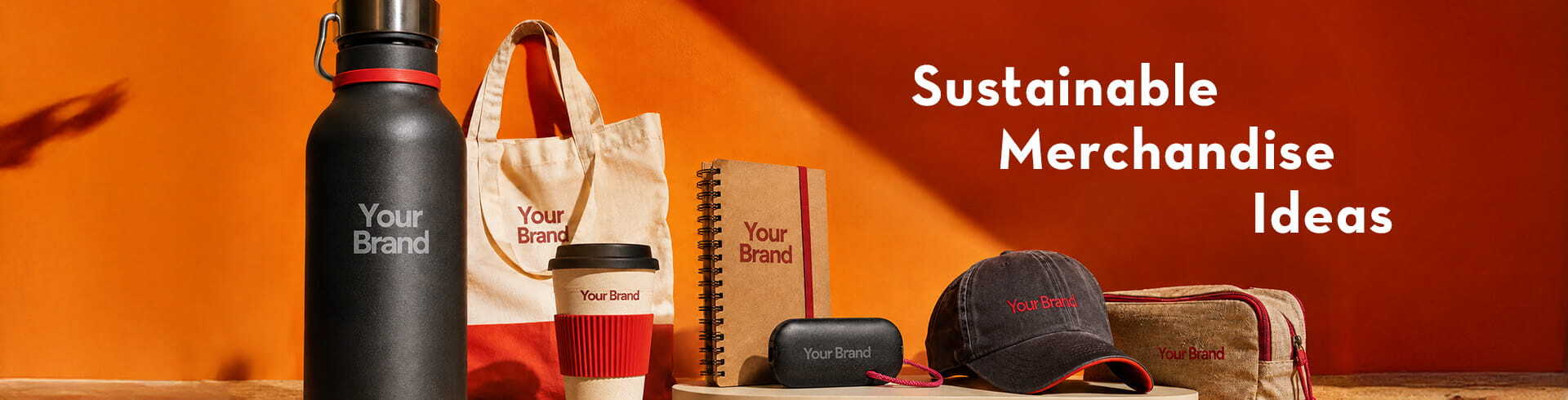
If you're still deciding what type of merchandise to use, start with products that naturally fit into everyday life.
Some common options include:
- reusable drinkware
- tote and reusable bags
- notebooks and stationery
- apparel
- technology accessories
- desk accessories
- travel products
- curated merchandise kits
The best option will depend on your audience and campaign.
For more ideas, see Sustainable Merch Ideas to Boost Your Brand.
You can also explore Sustainable Swag: A Guide to Choosing the Best Eco-Friendly Promotional Items.
Finding the Right Sustainable Merchandise Supplier
Finding the product is only the beginning.
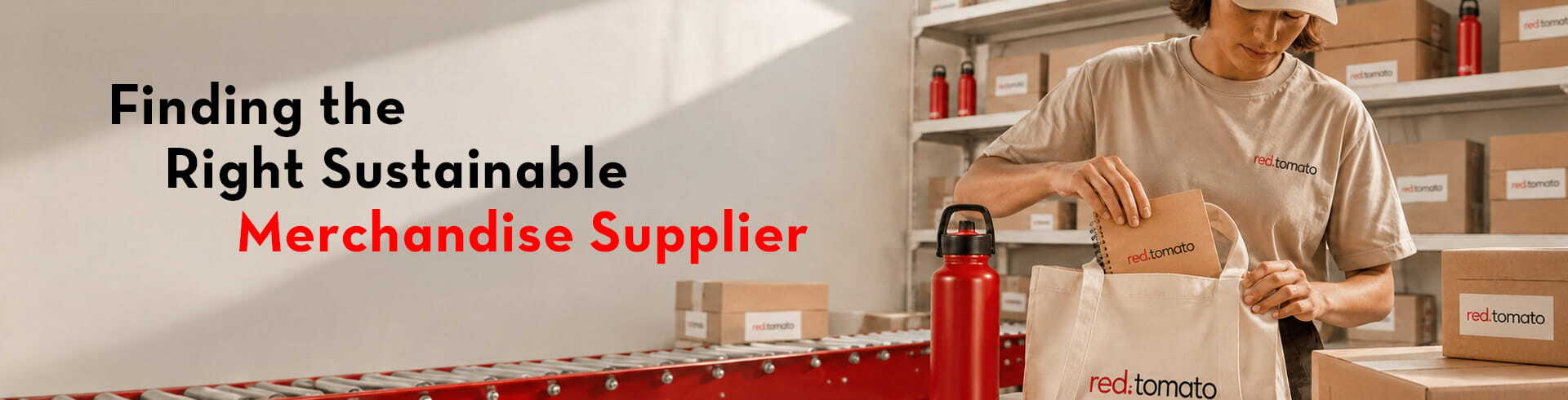
If you're ordering at scale, you'll also need to think about branding, storage, assembly, fulfilment and delivery.
A good merchandise partner should be able to help you work through the practical details, particularly if you're running an ongoing program rather than a one-off campaign.
When comparing suppliers, consider:
- product range
- branding options
- product sourcing
- minimum order quantities
- lead times
- warehousing
- kitting
- fulfilment
- national distribution
- ability to support repeat orders
For more information, see 7 Sustainable Merch Suppliers in Australia for Mid-Sized Businesses.
Red Tomato In Practice
At Red Tomato, we believe the most sustainable merchandise is merchandise people actually want to keep and use. An item labelled “eco-friendly” isn’t necessarily the best choice if it doesn’t suit the audience, purpose or campaign.
We look at the full picture, including materials, quality, longevity, packaging and how the product will actually be used. Sometimes the better choice is simply a well-made, relevant product that people will use for years rather than an “eco” product that ends up forgotten or discarded.
How to Evaluate Sustainability Claims
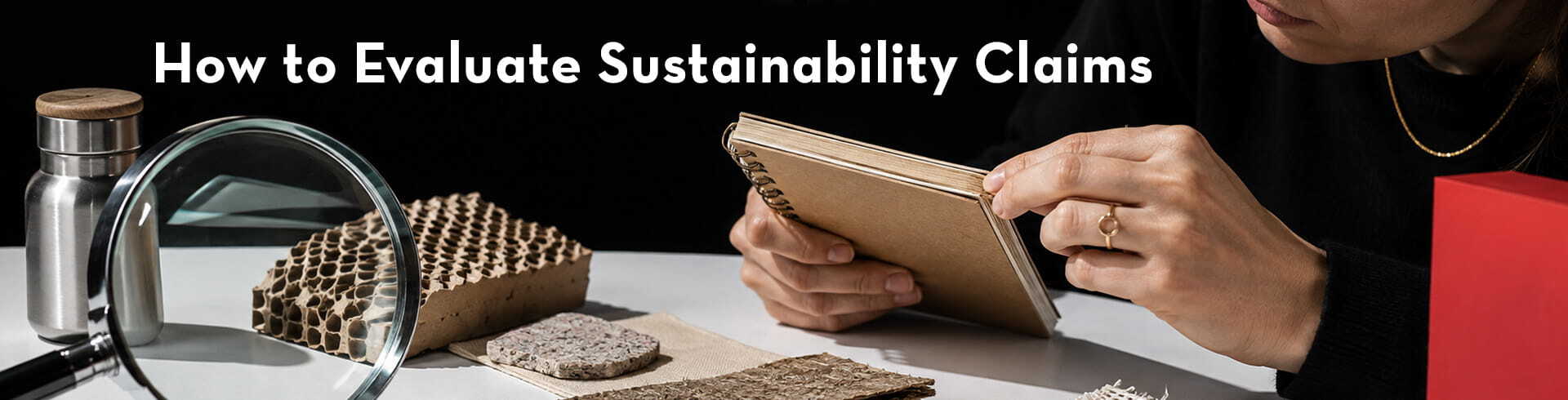
You don't need to find a product that claims to be perfect.
What matters is understanding what you're buying and whether it makes sense for your campaign.
When reviewing a product, look for specific information about:
- Material composition - What is it made from?
- Recycled or renewable content - Does it use recycled or renewable materials?
- Product lifespan - Is it designed for regular use?
- Reusability - Can it replace a disposable alternative?
- Packaging - Does the packaging support your overall approach?
- Supporting information - Is there clear information behind the sustainability claim?
Broad terms like “green” or “eco” don't tell you everything. The more information you have about the actual product, the easier it is to make a considered decision.
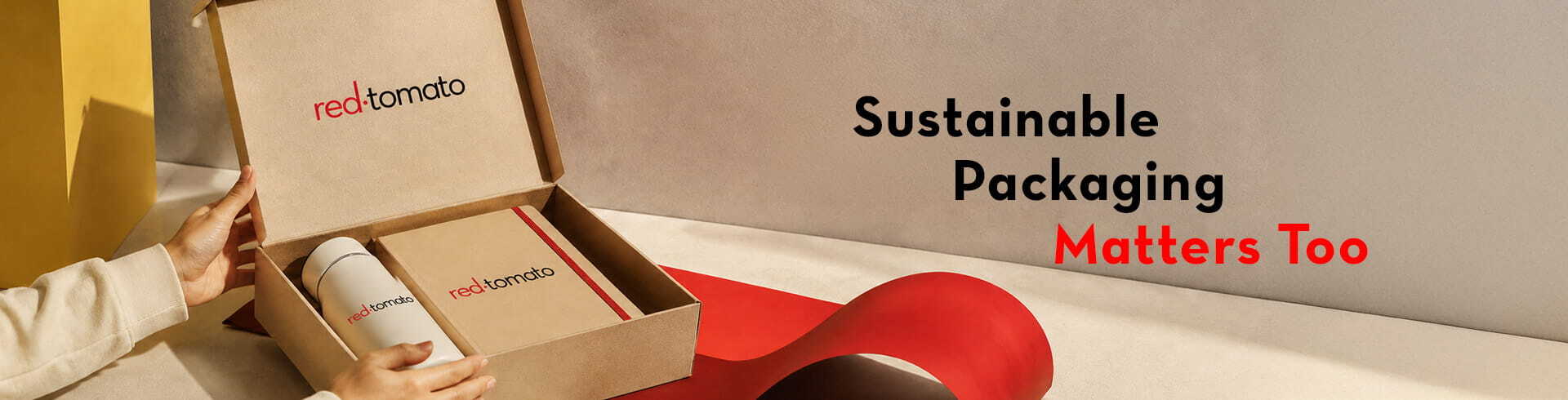
Sustainable Packaging Matters Too
Don't forget the packaging.
For gifting and onboarding kits, the box, insert or presentation can be just as much a part of the experience as the product itself.
Think about:
- whether the packaging is necessary
- how much packaging is required
- whether materials can be reused or recycled
- whether branding can be incorporated without unnecessary additional materials
- how packaging affects storage and delivery
You don't have to choose between sustainability and a good presentation. The two can work together when the packaging is purposeful and appropriate for the campaign.
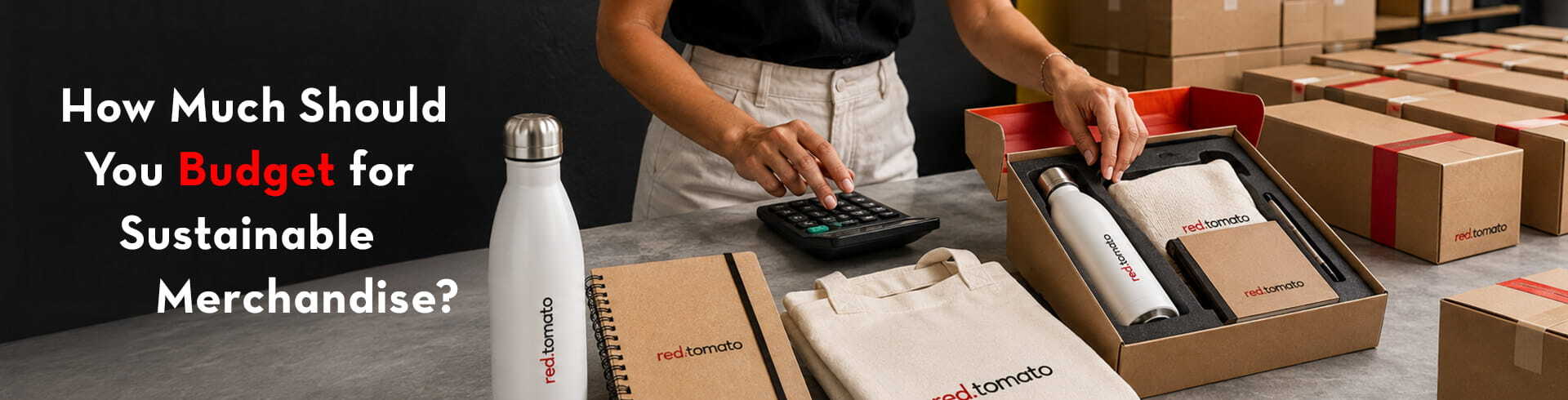
How Much Should You Budget for Sustainable Merchandise?
Sustainable promotional products are available across different price points, so there's no single budget that works for every campaign.
Start with:
- how many people you're buying for
- what type of product you're considering
- the level of branding required
- whether packaging is needed
- whether products need to be individually kitted
- storage and fulfilment requirements
- delivery costs
Don't look at the unit price in isolation.
Look at what you're getting from the complete merchandise experience, from the product and branding through to fulfilment and delivery.
Red Tomato Checklist: Eco-Friendly Merchandise
Before choosing eco-friendly merchandise for your campaign, make sure you've considered the following:
✔ Define the purpose. Know what the merchandise is for and how it will be used.
✔ Understand your audience. Consider who will receive it and what they are likely to value or use.
✔ Look beyond the label. Consider the product's materials, durability, usefulness and overall sustainability rather than choosing something simply because it is labelled “eco-friendly.”
✔ Consider the brand fit. Make sure the product aligns with your brand and the sustainability message you want to communicate.
✔ Consider quantity and budget. Balance your sustainability goals with the available budget and number of products required.
✔ Think about the full lifecycle. Consider packaging, production, shipping, use and what happens to the product at the end of its life.
✔ Choose products that will actually be used. A durable, useful product is often more valuable than an “eco” product that ends up being discarded.
Need Help Choosing Eco-Friendly Promotional Products?
Found a few products you like but not sure which one fits your campaign?
Red Tomato helps organisations across Australia source and customise eco-friendly promotional products for events, employee programs, corporate campaigns and other business initiatives. Our team can assist with product sourcing, custom branding and merchandise solutions based on your audience, campaign requirements and budget.
Ready to Explore Eco-Friendly Promotional Products?
Tell us what you're planning, who you're buying for and what you're working with. We'll help you explore options that fit.